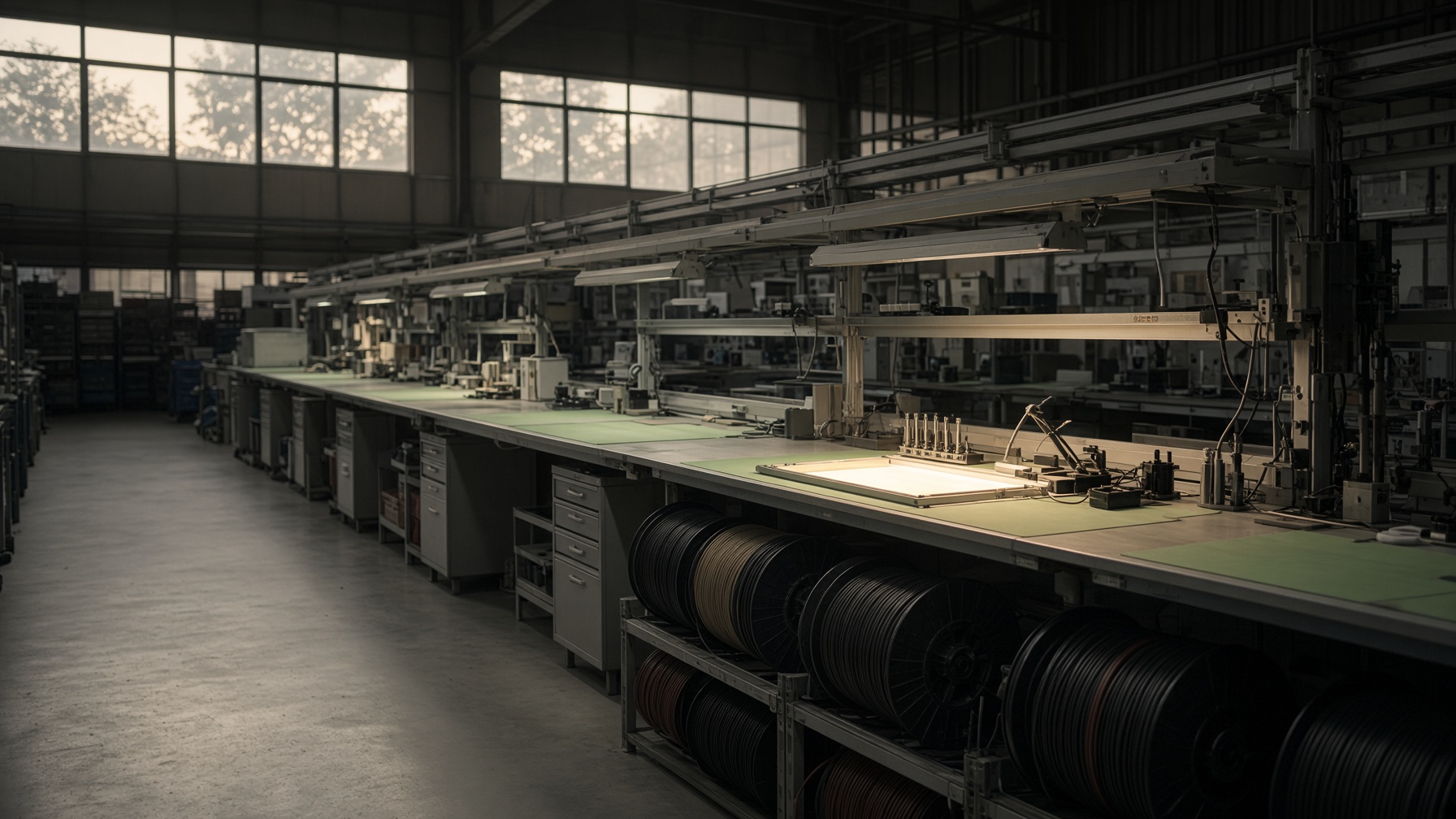
How to read a Dongguan quote
The number on top is rarely the number you will pay. A plastics quote is a menu, and the tool is its own line.
By Mei Chou · 2 November 2026 · 7 min · Dongguan
Sourcing editor on the Taipei desk. She reads quotes before she reads campaigns.
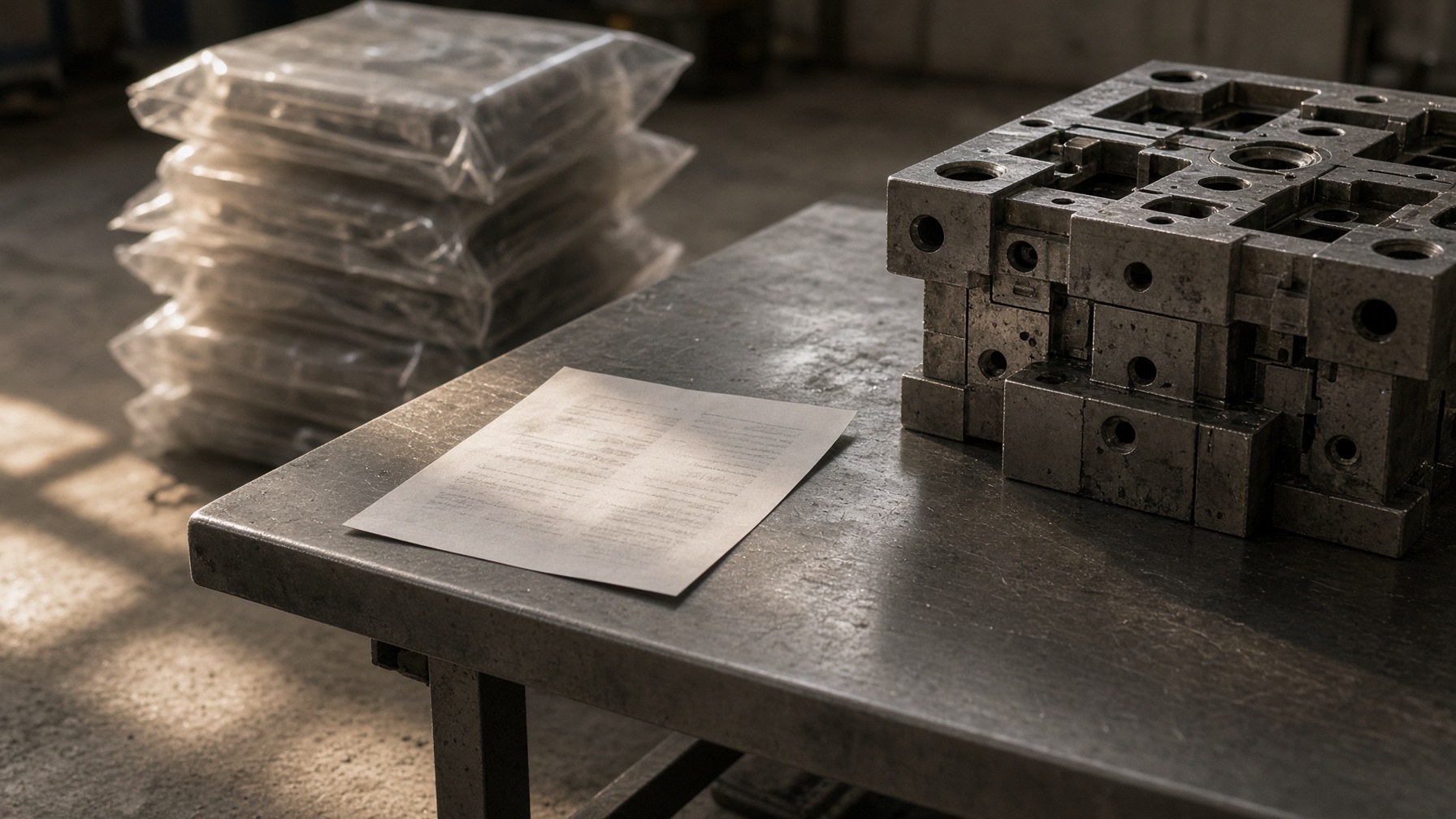
A Dongguan quote for a housing, a cup, or a small tool arrives looking finished. It is not. It is a menu written in the order the factory finds convenient. The unit price is the headline. The money is usually underneath it.
The number on top
Tooling is a line of its own. A colour change is a line. A mould already in the shop is cheaper than a mould that still has to be cut, and the quote will not always say which one you are being offered. If the tooling line is missing, you do not have a price. You have a greeting.
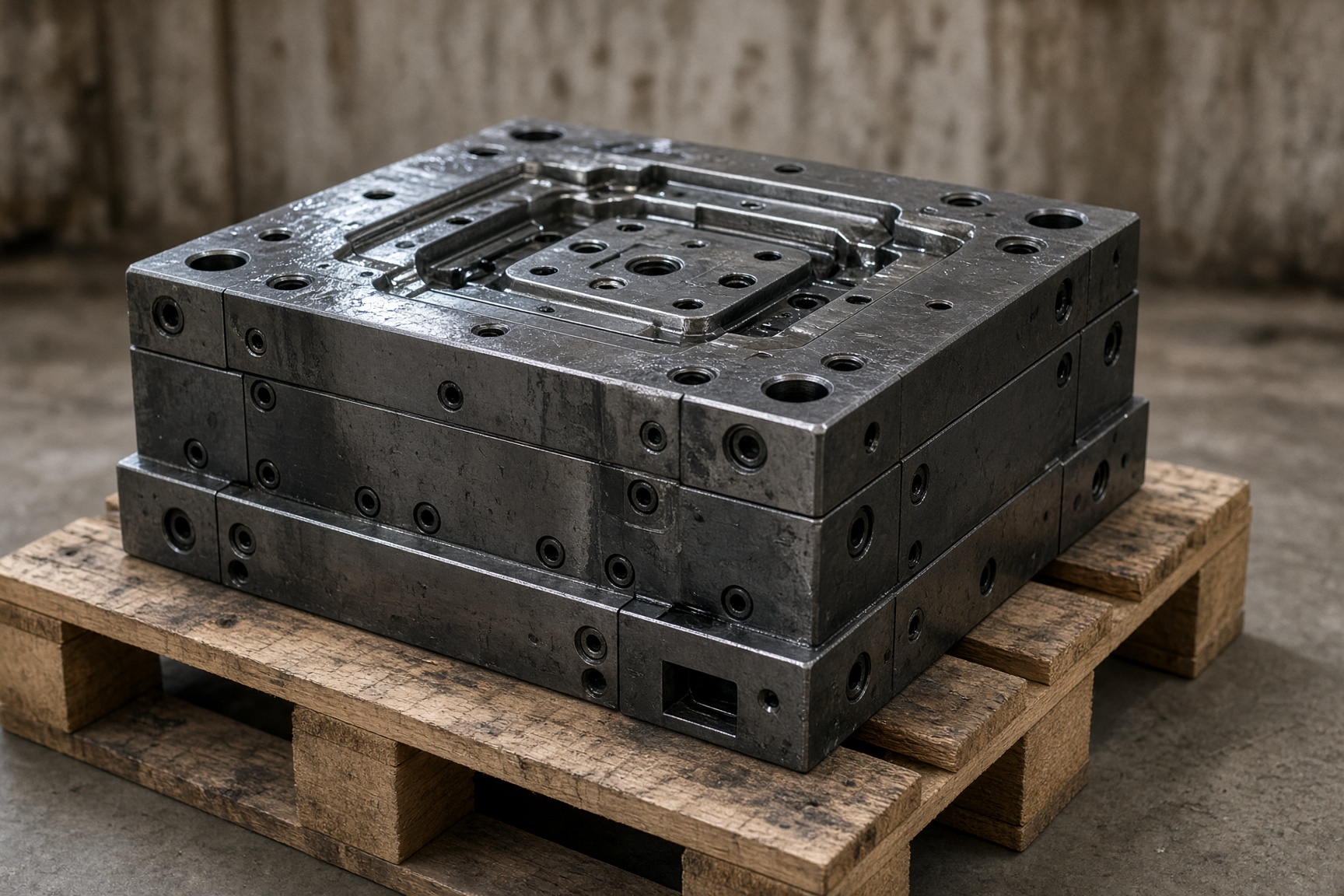
What to circle before you compare
- The tooling line. Missing means the unit price is not a price.
- The MOQ in cartons, not only in pieces.
- What a sample costs, and whether it comes off the production tool.
- Who owns the tool when you stop.
Ask the minimum as money
A low piece-price at a high MOQ is how a small brand gets stuck with a warehouse. Ask the minimum as a quantity and as a value. Ask what the unit includes: assembly, a print, a polybag, the carton, the test. If your label has to name a place, ask which side of the strait the resin is coming from. Then, and only then, compare two factories.